
This story discusses suicide. If you or someone you know needs help, the national suicide and crisis lifeline in the U.S. is available by calling or texting 988. There is also an online chat at 988lifeline.org.
ICE memos record every step of Brayan Rayo-Garzón’s death in custody — and the fault of no one. Similar deaths have been recorded, documented, and archived by the state. Yet the deaths have not stopped. Between January 20, 2025, and June 4, 2026, 52 people died in Immigration and Customs Enforcement (ICE) custody in the United States. The mortality rate in ICE custody is at its highest level in over a decade (Human Rights Watch and Physicians for Human Rights, 2026).
The healthcare system, so dependent on immigrant labor, has also seen its staff flee or be detained — most recently Ann Lawani, a nurse and professor.
All of these deaths and detentions have been recorded as “procedures” and described in official ICE memos as a “synopsis of events.”
Can an archive of death be more than a “synopsis of events”?
What does it mean to archive and yet remember nothing?
What does it mean to name and yet erase those who have been named?

Brayan Rayo-Garzón was 27 years old. He was in ICE custody at the Phelps County Jail in Rolla, Missouri. Brayan had COVID-19 and wanted to talk to his mom. “She must be worried,” he wrote in Spanish on a piece of paper he passed to one of the guards, hoping they would let him call her. They did not. Brayan died by suicide.
Photo for NPR by Deisy Garzón.
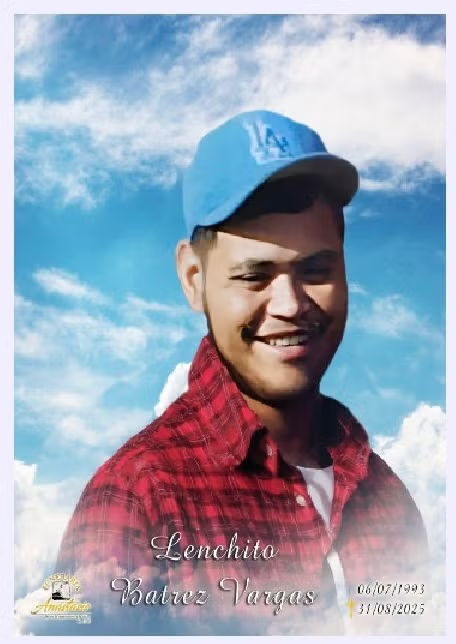
Lorenzo Antonio Batrez Vargas was 32 years old. He died on August 31, 2025. ICE held him at the Central Arizona Correctional Complex in Florence. About 10 days after he arrived, he tested positive for COVID-19 and was isolated in a medical unit. He received a single dose of acetaminophen. Chest X-rays later showed signs of pneumonia; ICE’s own review said his antibiotics “did not align” with CDC guidelines. After leaving isolation he had trouble breathing. The next day he reported shoulder pain, and no one checked his oxygen levels. Staff later found him dead (The Intercept). ICE listed the cause as unknown, and called claims that he received poor care “FALSE.”
Photo from Batrez Vargas family personal archive for Human Rights Watch

José Guadalupe Ramos-Solano was 52 years old. He was from Silao, Guanajuato, and had lived in Los Angeles for 28 years. He died on March 25, 2026, at the GEO Group’s Adelanto ICE Processing Center in California. ICE said he received ongoing care for diabetes and hypertension (Latin Times). Other detainees say they repeatedly tried to alert staff to his worsening condition, and that he got no medical attention until he was already unconscious (Colorado Boulevard). His autopsy, obtained by Scripps News in May 2026, says he had been suffering from COVID-19 for days, with high blood pressure and cardiovascular disease as contributing causes of death.
Photo by Gloria Ramos for GoFundMe.
***
At Rituals in the Making, we have long asked what it means to name the dead. We have asked about the people who died of COVID, and the silence that closed around them. We have asked about their families, and the cry they raised against denialism. We have asked about unjust death, disposable death, and how the state writes those deaths down.
Six years after the pandemic began, we want to turn to the archive as well: to what is kept, and what is lost, in the midst of denialism. And we want to follow how COVID’s neglect and dehumanization echo in other forms of violence.
***
It is often assumed that states that produce violence would rather not write it down. The opposite is true. States often do not only produce death, or take part in it; they narrate it, with clinical attention, in official memos. The sequence of events. The number of dead. The setting. This paperwork lends the state legitimacy. It becomes an anchor from which to say how things “really happened,” and a lever for pushing “the real history” — that with a capital H. States memorialize as well.
However, memorializing, we want to argue, is not just about recording, about documenting. Working with the bereaved, with grassroots organizations, and on civil claims has allowed us to learn that the seeming monumentality of state documentation is matched by the size of its vacuums, its silences, and its reiterations: not only in its insistence on (mis)remembering the 1.2 million people who died of COVID-19 in the United States alone, but in its reproduction of falsehood, violence, and cruelty — in its neglect.
With this new series of dispatches, which began last week with Sarah Wagner’s article on the memorials for Renee Good and Alex Pretti, we want to insist on other ways of remembering the pandemic dead against the state archive — what Sarah Wagner and Ariel Santikarma call “memorialization as movement work,” one in which “the dead and specifically their memory are animating forces in pushing for political change.”
“[F]rom the movement of an individual’s hand in tracing the portraits of the deceased to creating a space of memorialization that forges social ties through and beyond life, the living work with the presence of the absent. The dead are thus remembered and transformed as kinful forces, who make the revolution of memory — and its movements toward both a livable present and future — possible.” — Santikarma and Wagner
To counter-archive is to remember against the grain of state paperwork. It is to ask how an archive might become something living: changeable, amplifiable, made together — a movement at work. For what, for whom, and why?
If the dead are “animating forces in pushing for political change,” then remembering cannot simply mean documenting them, or listing their names. Remembering has to entail naming them well: remembering with them, and with the social fabric their absence tears. It has to mean reading the archive of death not as a “synopsis of events,” isolated, with no one responsible, but as a record of the policies that go on producing death. It is not enough to name the dead if we do not name their lives. It is not enough if the archive does not give us back their haptics — our willingness, as Tina Campt puts it, to be touched by those in the archive. It is not enough if nothing is done about what killed them in the first place.
As we ask what an oral history archive of COVID could be, we cannot look away from where COVID still appears, six years after its first case: in political discourse — in the memos, autopsies, and death reports of people held in ICE custody. Brayan, Lorenzo, José, and many others were all sick with COVID in custody.
Since 2020, human rights organizations have repeatedly warned that immigrant detention centers do not meet the conditions needed to prevent and treat illness in time. “When a government detains a person, it has a heightened obligation to protect their rights, and to this end must provide adequate health care and other protections. In the case of a death in custody, the government should also provide all relevant information to the family, including medical reports and investigations into the death” (PHR, 2026).
Yet the Department of Homeland Security has stopped listing most detainees with final deportation orders — tens of thousands of people — in ICE’s online detainee locator, as The New York Times reported (and the Associated Press first revealed the change in September). This makes it almost impossible for lawyers to defend them, since no evidence can be gathered and no case built. Physicians for Human Rights also found that in 39 cases it reviewed, “the government did not publicly provide sufficient information about the circumstances of death or about the medical care provided in detention to support a definitive clinical assessment. The available documentation was often scant, but it was nonetheless sufficient to identify serious concerns about the care provided.” Brayan’s death is one of those 39.
BRAYAN
A CASE, A NAME, AND YET so MUCH MORE
On his fourth day alone in a cinderblock cell in Rolla, Missouri, sick with COVID, Brayan Rayo-Garzón slid a note under his door. He wanted to call his mother. He felt in his heart, he wrote in Spanish, that she was very worried. He appealed to the man on the other side of the door: “I know you have family, and you know that they worry about us. God bless you.”
The guard collected the note. He did not speak Spanish, so he used a colleague’s phone to translate it, and wrote in a report that he planned to follow up. Within an hour, Brayan was found unconscious.
Refusal 1: The Body
The Phelps County Jail had been accepting ICE detainees for only a month when Brayan arrived. The sheriff had pitched the partnership to county commissioners as a way to bring revenue into a strained budget — millions of dollars, he told them. ICE pays a fixed sum for each detained body, each day — typically between $70 and $110 for a county jail — so a filled bed is income, and an empty one is a loss. Some counties have expanded their capacity precisely to capture that income. Care, in other words, was a side effect of a financial arrangement.
ICE promises a medical screening within 12 hours; Brayan’s took 35. He told a nurse he was anxious. He was referred for a “routine” mental health appointment. Days later he tested positive for COVID and was moved into an isolation cell with a camera overhead, framed as protection against spreading the illness. His mental health appointment was scheduled and then canceled twice: once for lack of “mental health clinic time and staff,” and once because of his COVID diagnosis, the AP investigation found.
Research suggests that COVID can bring on depression through neuroinflammation. The same severe immune response — the cytokine storm — releases signals (interleukin-6 among them) that may reach the brain and disturb the circuits that regulate mood. Neuropsychiatric symptoms are common in the acute phase, and a growing body of research has begun to connect that inflammation to suicidal ideation, in what researchers call the inflammatory hypothesis of suicide. Brayan was in physical distress (shortness of breath, trembling, fever) and, evidently, under psychological stress that was not addressed but instead postponed and neglected.
Refusal 2: The Language
The nurse who assessed Brayan did not speak Spanish. She used a handheld translation device, and through it “concluded” that he denied thoughts of suicide and depression. She recommended him for the general population and listed his condition as stable.
But Brayan had told the staff he was suffering. He was not the only one. At a Pennsylvania facility, Chaofeng Ge, a Chinese detainee, received no mental health treatment, in part because no one there spoke Mandarin (AP); he had already attempted suicide before.
Every night before bed, Brayan called his mother to share a blessing. “I gave him strength,” his mother, Adriana Garzón, said. Her name was tattooed on his arm. That call was their one ritual, and it was forbidden as a precaution against spreading the illness.
The only call ICE did place was the one telling her that her son was dying.

A well-run facility should have no suicides at all, because the moment the state detains a person, as experts told the Associated Press, it takes on the duty to keep that person alive. But even that simple assumption has changed. A new memo from acting ICE director David Venturella has ordered the agency to stop reporting the deaths of newly released detainees.
Brayan now joins the ranks of those who contracted COVID but did not die of it. Instead, they died of the state’s refusal to recognize, to care, to act. Brayan died alone, as did so many of the COVID victims whose lives and deaths we have studied over the past several years.
Again, we see the connection. We hear echoes of the victim-blaming public discourse of 2020 (“Wasn’t he overweight?” “Didn’t she have asthma?” “They lived a long life anyway”) in the logic that justifies an ICE detainee’s suffering — his very detention, and even his suicide (“the worst of the worst,” as the administration calls them). With its paperwork and memos, dehumanization starts to look like simple procedure.
The scholar Saidiya Hartman has asked how we are to mourn when the event has not yet ended. The pandemic never ended for Adriana Garzón. For her, it simply went unwatched.
The official record calls its account a “synopsis of events,” and a synopsis is exactly what it is: a list of procedures, each supposedly neutral and defensible, that forgets the man passing a piece of paper to a stranger, asking only to hear his mother’s voice one more time.
“I beg you […] God bless you,” he wrote. And then he waited.
Coda
When the state offers no common form for loss, the labor of eulogizing and remembering falls to individuals. Ed Koenig, a longtime friend of Rituals in the Making and an advocate for the COVID-19 impacted, is one of those individuals. Ed lost his partner, Jody, to the pandemic and refuses to stop naming the dead — that is, feeling with those who are named. Over the past weeks, we have been inspired to see how his advocacy extends to standing against all forms of violence, including those beyond or alongside COVID.
Here is a short interview with Ed about his ongoing activism in New York City.


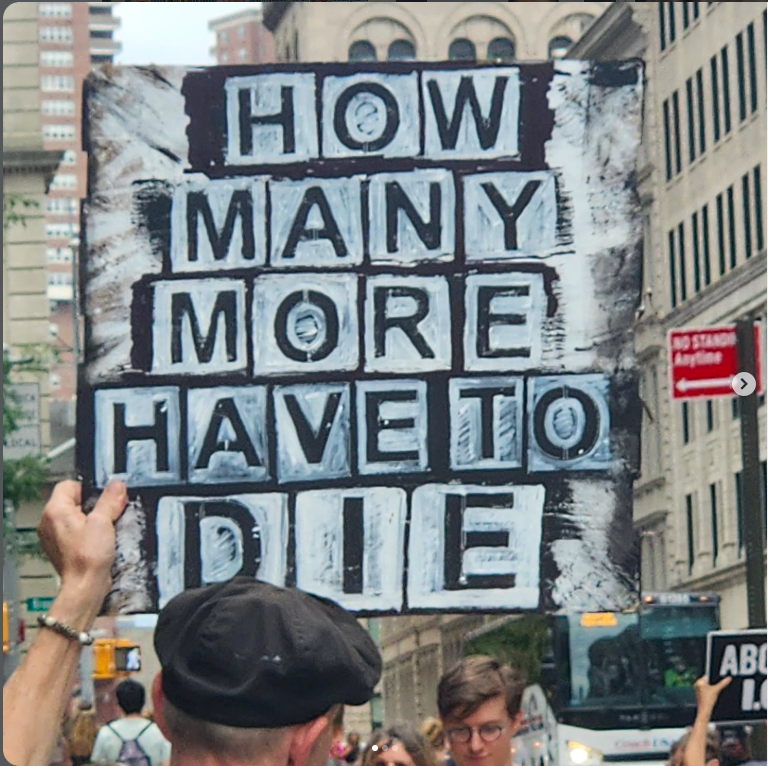
Photos by Ed koenig from the weekly silent vigils at 26 Federal Plaza, Manhattan.
Rituals in the Making: As someone who lost a loved one to COVID, you’ve been actively involved in shaping movements to remember those who died and to push back against denialism. Has your personal experience with COVID influenced your desire to speak out against other forms of violence, like violence against migrants?
Ed: I think my involvement in memorializing those lost to COVID-19 goes back to my earlier activities around the HIV/AIDS epidemic of the 1980s and 1990s. During that period, my partner, Jody, and I lost dozens of friends and acquaintances. It was the first time in my adult life that I realized that society in general, and the U.S. government in particular, easily denigrates the marginalized by blaming them for their own circumstances. Here are some examples of what I mean.
Early in the HIV/AIDS epidemic, gay men were told that their illness and suffering were their own fault because they engaged in “illicit” sexual encounters. Over time, intravenous drug users who became infected were blamed for their own illness because of their addiction and the sharing of hypodermic needles. Even after it was determined that HIV/AIDS was caused by a virus, and members of the so-called “straight” community were also affected, the stigma continued. (As an aside: in 1987, when Jody first showed symptoms of multiple sclerosis and was hospitalized, he “volunteered” that he was gay. As a result, some hospital staff members would not provide him with services because they assumed he was HIV-positive. For example, they would leave his meal tray on the floor at the doorway to his room and refuse to bring it to him. Just a small example of what was going on.) Amazingly, it took five years for the President of the United States, Ronald Reagan, to even say the word “AIDS” in public. The government just didn’t care.

I believe there have been few, if any, public monuments to those who died of HIV/AIDS. Memorialization was left to friends and loved ones. The primary memorial is the AIDS Memorial Quilt, created by family and friends. The quilt is made up of panels, three feet by six feet, that contain the names, photographs, and various mementos honoring those who died. On October 11, 1987, the quilt was first displayed on the National Mall near the U.S. Capitol. October 1996 was the last time the full quilt was displayed, with 40,000 panels laid out on the National Mall stretching all the way from the Capitol to the Washington Monument. The white flags of the In America display on the National Mall in September 2021, honoring those lost to COVID-19, immediately made me think of the AIDS quilt — memories of loved ones inscribed by those who knew them best.
So, when COVID-19 arose, I was not surprised that those who became infected were blamed for their own illnesses or deaths. If they weren’t old, if they weren’t diabetic, if they weren’t fat, if they had taken better care of their health, they wouldn’t have gotten sick. Of course, we know that this was not always true. Again, it was the “blame the victim” game all over again. Sadly, those with COVID-19 became a handy foil for a callous and incompetent government hell-bent on retaining power. When Jody died, and as I got to know others who had lost loved ones, I knew it would be important for us to memorialize them ourselves — to let the world know that they had lived and loved, and that they mattered. So, whenever I learn of a COVID-19 memorial being created, I have always made sure Jody is included.
Since the severity of COVID-19 has waned, immigrants in the United States have become the new marginalized. It’s not surprising to me that this has been spearheaded by the same government officials who mishandled the COVID-19 pandemic. They need a new bogeyman, and immigrants fit the bill. They forget that it was the labor of many immigrants that kept this country running when we were all under lockdown. All this, coupled with my faith tradition, motivates me to stand up for immigrants and ensure that they are respected, as they rightly deserve to be.
Rituals in the Making: Do you see a connection between how COVID deaths have been dismissed by blaming comorbidities and the dehumanization of migrants?
Ed: First of all, I would say that the forgetting of the destruction caused by COVID-19 and the treatment of immigrants in detention centers are both symptoms of our society’s nefarious need to have someone to blame for our own personal problems. We forget COVID-19 because it distracted us from our own pursuits — I had to stay home; I couldn’t go to the movies or eat in a restaurant; I had to wear a face mask! — and we don’t want to be reminded of that. The dehumanization of immigrants seems to me to follow from many people’s need to feel superior to someone else. Sadly, for many, seeing someone locked up in a detention center, separated from family and friends, and treated inhumanely gives them the chance to look down on someone else as inferior. I guess I don’t see them as directly related, but they stem from the same societal issues.
Rituals in the Making: Over all these years of working alongside grassroots organizations and people who lost someone to COVID and are now speaking out against ICE, are there any stories or anecdotes you’d like to share? What have you learned with and from people who, like you, lost someone during the pandemic, or who have now lost someone to ICE violence?
Ed: What I have learned over the years is that people will step up and care for each other even when society and government are unwilling to. In the era of HIV/AIDS, LGBTQ people came forward to care for those who were sick because no government services were available or willing to do so. The same is true of those impacted by COVID-19. We came together to help each other cope, to share information and experiences, and just to be there to listen on a bad day. It also occurs to me that much of the work AIDS activists did to gain access to treatments and medications for HIV/AIDS paved the way for the rapid development of the mRNA vaccines that helped lessen the impact of COVID-19. Now that I have been working with the immigrant community, the work is the same. Families have needed comfort when detainees have been killed by government agents. They need so many forms of support when a family member — often the only breadwinner — is incarcerated. Just as people reached out to those of us who lost someone to COVID-19, now we pay it forward and reach out to care for our immigrant brothers and sisters.
CODA OF CODA –

Ed, in a later email: “I find myself looking around at these folks and thinking that in many ways they are the ones who kept the country going in the darkest days of the pandemic and this is how we reward them! This, to me, is another (hidden?) link between the COVID-19 pandemic and its unexpected deaths and the numerous, needless deaths of immigrants in ICE custody. It’s no wonder I often find myself careening between rage and tears.”
Leave a Reply