
Guest dispatches curated by Martha Greenwald
***
From January to late April 2021, the city of Louisville, Kentucky ran an elaborately coordinated COVID-19 vaccination site at Broadbent Arena within the Louisville Exposition Center grounds. The clinic administered over 100,000 shots and employed volunteers who put in over 76,000 hours.
The project was recognized worldwide as a model for how to successfully run a mass vaccination project, and was featured on the front page of The New York Times.
The last shots were administered on April 29th, 2021. In recognition of the fourth anniversary of LouVax’s conclusion, two volunteers, Juli Duvall and Michael McWilliams, offer their perspectives on what their participation meant (and still means) to them.
- Someday and Somewhere Else
By Juli Duvall
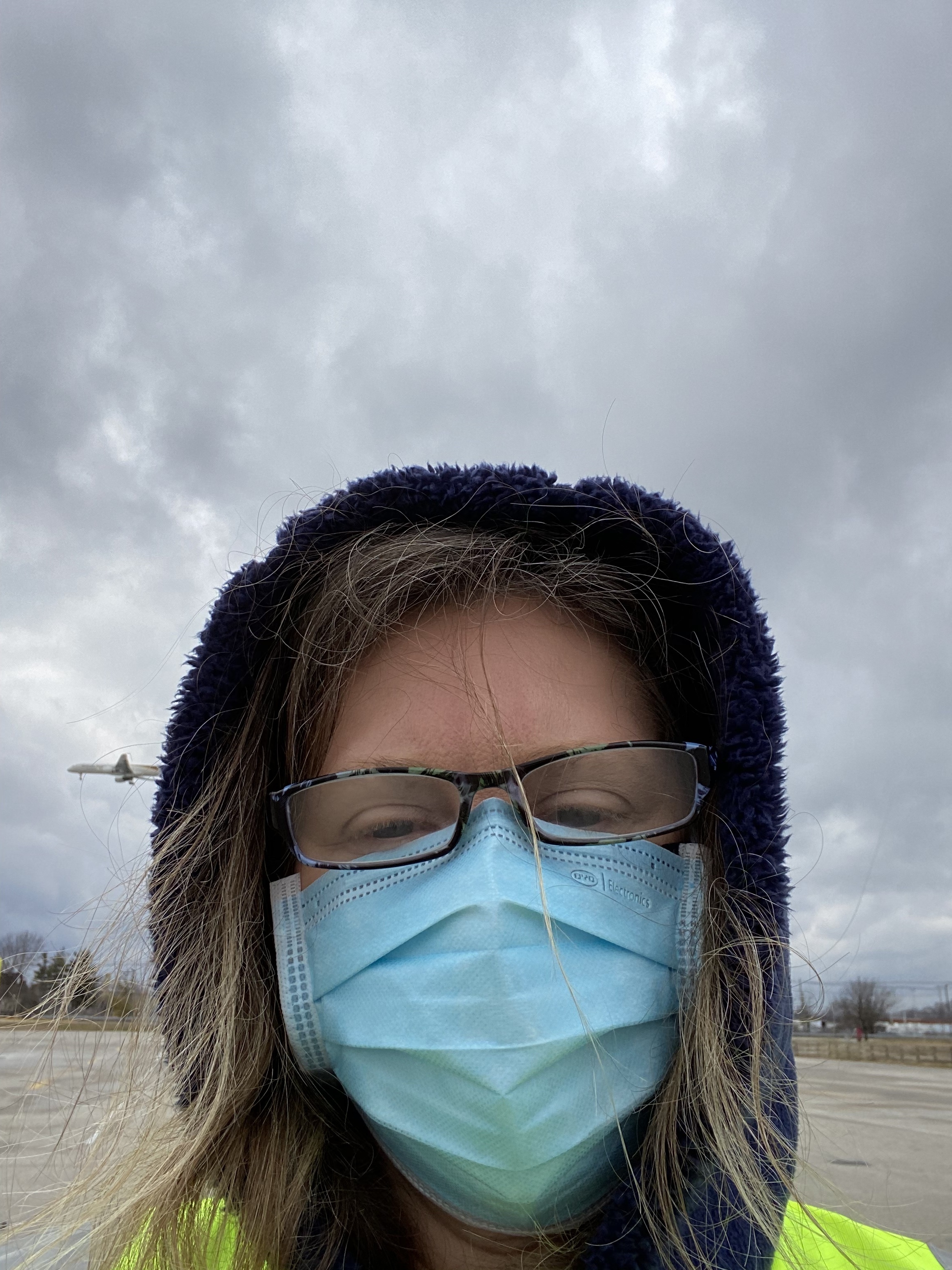
Three shirts. Two pairs of pants. Coat with a warm hood. A double layer of masks, even outdoors. For warmth, yes. For safety, yes. I even wore eyeglasses instead of my usual contact lenses as an extra layer of protection against the little-known virus named COVID-19.

January 26, 2021 seems like an eternity ago. It was the second day of my two-week stint volunteering at the LouVax clinic in Louisville, Kentucky. I felt intense trepidation to step outside my small family bubble into this frenetic operation full of so many strangers. However, fear soon took a backseat to pride. The palpable buzz of this incredible mass vaccination drive-thru COVID center energized me. This was the first significant step forward to get our city back to some level of normal. With perseverance, we would get through this tough time.
I was assigned to staff an outdoor zone where drivers would line up after receiving a vaccination. About an hour into my four-hour shift a loud noise startled me, one I had not heard in a very long time—the roar of an overhead airplane. Part of my task was to time cars waiting in my exit line, so I already had a phone in my hand. I switched to camera mode and snapped a quick selfie, hoping to catch the plane in the background.
I immediately thought of my son. He was at home attending his high school freshman year classes online. This picture could boost his spirits, as he adored airplanes and wanted to learn to fly one day. This snapshot would prove to him that the world was still turning and not everything outside our bubble had come to a halt. I took a moment to daydream about where the plane was coming from. It was most likely a UPS plane, as Louisville is its main hub. Nevertheless, boxes and packages are still flown by pilots, humans, going from here to all over the world. These aviators would crisscross the skies and likely stay for a day or more somewhere else—a different state or country. Even after ten long months of the pandemic, the concept of “someday” and “somewhere else” still felt very far away. Witnessing this plane in motion gave me the belief and reassurance needed that the world would someday feel ordinary again.
Most of my volunteer days were fairly routine, cars pulling up and being released after a specified amount of time in each lane. However, there were a few moments of levity and excitement along the way. Two of these in particular have stuck with me for years. One was when a close friend of mine pulled up in my exit row. What are the odds of that with almost 1,000 cars coming through each day? I waved my arms frantically until she cracked her window. Her puzzled look made it clear she didn’t initially recognize me in all the layers of masks and clothes. Ultimately, we had a good laugh and a quick chat before her row was dismissed. The second memorable moment occurred when a car pulled up blasting Journey’s iconic 1980s rock anthem “Don’t Stop Believin” from the radio. A few other volunteers noticed as well so we had a quick impromptu dance break and air guitar session right there in the arena’s parking lot. We all had a good laugh, driver included, as she drove off.
LouVax at Broadbent Arena ultimately provided over 100,000 vaccinations with the help of more than 2,500 volunteers ranging in age from 18 to 84. As a mom, I was helping to keep my family safe. As a Louisvillian, I was helping my community emerge from the depths of a global pandemic.

Volunteers were kindly gifted a t-shirt with the words “LouVax Hero” emblazoned across the front. I have almost worn out the shirt over these past years with countless wearings and washings. My favorite place to don the shirt is while traveling, especially on airplanes. It reminds me of how far we have come since those cold January days at the arena. Perseverance paid off, and our “someday” and “somewhere else” finally came back to us. My son has even achieved his dream of obtaining a private pilot’s license. I could not be more proud of both my family and our community.
II. Connectedness, Camaraderie, Joy
By Michael McWilliams
I had heard about a call for volunteers at LouVax in January of 2021, an operation to provide mass vaccinations at Broadbent Arena for the Louisville area. The arena, normally used for Monster Trucks and cattle exhibitions, became a giant drive-thru for jabs.
Winter cold had worsened the pain in my tender left knee but it felt insignificant compared to the effort 115 volunteers were performing on a daily basis—and I had the privilege of being one of them.
Police security was tight in the building. A computerized check-in procedure was necessary for those volunteers to enter the restricted area. All staff were required to don yellow safety vests and mask up. Volunteers worked outside to direct incoming traffic into four lanes inside the building. Medical students coordinated planning of how many doses would be needed for the next few hours. Runners picked up the syringes from a makeshift pharmacy and delivered them to nurses and others to be injected into waiting arms in the lanes. Still others monitored a mandatory waiting area post-injection for adverse reactions. My tasks were to draw up the vaccine into syringes within the sterile environment in one of three laminar flow hoods. I used to manage a homecare infusion pharmacy, so I felt very comfortable in a reboot of my old role.
Dentists, physicians and other pharmacists worked alongside me to keep the flow of syringes going out to the nurses in the injection lanes. Some of the most interesting times were during the noon hour when local TV stations would do live shoots and interviews on site, including that of then Mayor Greg Fischer and Kentucky Governor Andy Beshear.
From a pharmacist standpoint, I was amazed that the process was able to run as smoothly as it did. The vaccine was so new and the stability of the Pfizer vaccine was labile enough that it had to be delivered in special freezers stored at 97 degrees below zero. (The Moderna brand was more stable and could be stored at -4, which was more freezer friendly; today’s ready-to-inject vaccines are stored at refrigerator temperatures for up to 10 weeks.) In fact, the first batch of vaccine was transported to Louisville International via a special UPS flight and delivered to the arena under a police escort. The vaccine was liquid gold.
It is hard to adequately describe the feeling of connectedness, camaraderie, and joy as we worked. Doctor, nurse, non-medical volunteers—status did not make a difference. There was no grandstanding and volunteers accepted their duties selflessly. We were assembled in Broadbent arena for one reason, to bring hope and safety back and to instill some sense of normality. That was all that mattered.
Slogans of support for the volunteers were posted in cinder block hallways and in a makeshift lunch area, but my most moving and vivid memories come from posterboards in the lobby, the expressions of prayers, compassion, and affirmations. Volunteers were encouraged to post their thoughts, one board for each week.
The boards were titled, “Tell us your WHY. . .”
- “To help make a difference and get the world back to normal”
- “To help the world open back up”
- “To help where I can to end Covid-19”
- “Hug my nina”
- “My husband has cancer and is doing immunotherapy and I want him to stay safe”
- “For all my fellow nurses who have been on the front line every day”
- “To see my Grandma again”
- “I believe in science”
- “It feels good to finally be able to fight back”
- “We are stronger together”
Connie Mendel, then Deputy Director of the Louisville Health and Wellness summed it up best in an article for the Louisville Courier Journal (March 9, 2025). “In the light of a horrific pandemic and people dying, this was an opportunity for us to literally save lives and get people back together.”


LouVax lasted for 17 weeks, after which the vaccine effort in the city became more localized. Over 100,000 doses were given and lessons were learned about how to respond to a future pandemic, which, hopefully, won’t be seen for another century. Sadly, we lost one of LouVax’s most instrumental organizers, Dr. SaraBeth Hartlage, Associate Medical Director for Louisville Metro Public Health and Wellness, who died suddenly in March 2022.
As for me, I ended up going back to work part-time at a community health center and eventually getting a knee replacement. But I’d do this again in a heartbeat.