Interview with Homeless Resource Center Executive Director, Brett Hartford, for the Unhoused Narratives Project
***
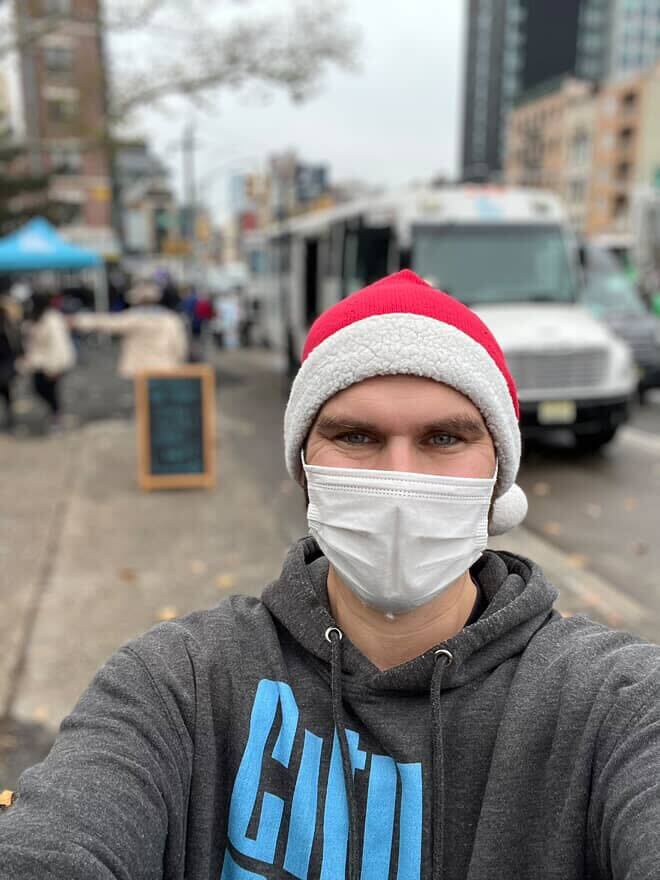
On June 10, 2025, Hanaan Khabir interviewed Brett Hartford (he/him) on his experiences working with unhoused populations during the official years of the pandemic (March 2020-May 2023). Hartford is currently the executive director of the Homeless Resource Center, a Kansas-based organization offering aid and resources to those experiencing homelessness. Before becoming director, he served as the director of outreach and operations at City Relief in New York, providing an on-the-ground mobile resource hub for members of the unhoused populations across different boroughs in New York City.
“Overnight, 30% of all nonprofits shut down… [and] we went from serving two to three to 400 people on an outreach event…to overnight serving 800…We went from having a line that went a block or half a block to lines that were going three and four blocks. And in order for someone to access a cup of soup and a piece of bread, people were standing in line for over two hours.” Hartford’s words capture the scale of the immediate crisis brought on by the COVID-19 pandemic. In 2020, New York City had a population of approximately 8 million, with an estimated 8 in 1000 people experiencing homelessness, accounting for almost 90% of the state’s unhoused population. The consequences of shutting down and restricting indoor and nonessential services were as immediate as they were devastating.

On the morning of March 22, 2020, New York City was still bustling in the way it’s known to: people went to work and to school, rode the subway, hung out in bars and restaurants. Even with the looming threat of COVID, the city that never sleeps continued to do what it does. People were encouraged to stay home if they were sick, but everything was still open. But at 8 pm that day, the city that never sleeps was put to rest. The governor at the time, Andrew Cuomo, signed “The New York State on Pause” executive order — effectively closing all non-essential and indoor businesses and organizations. By the morning of March 23, many businesses — including those that provided aid and resources to individuals experiencing homelessness — closed their doors for the foreseeable future.
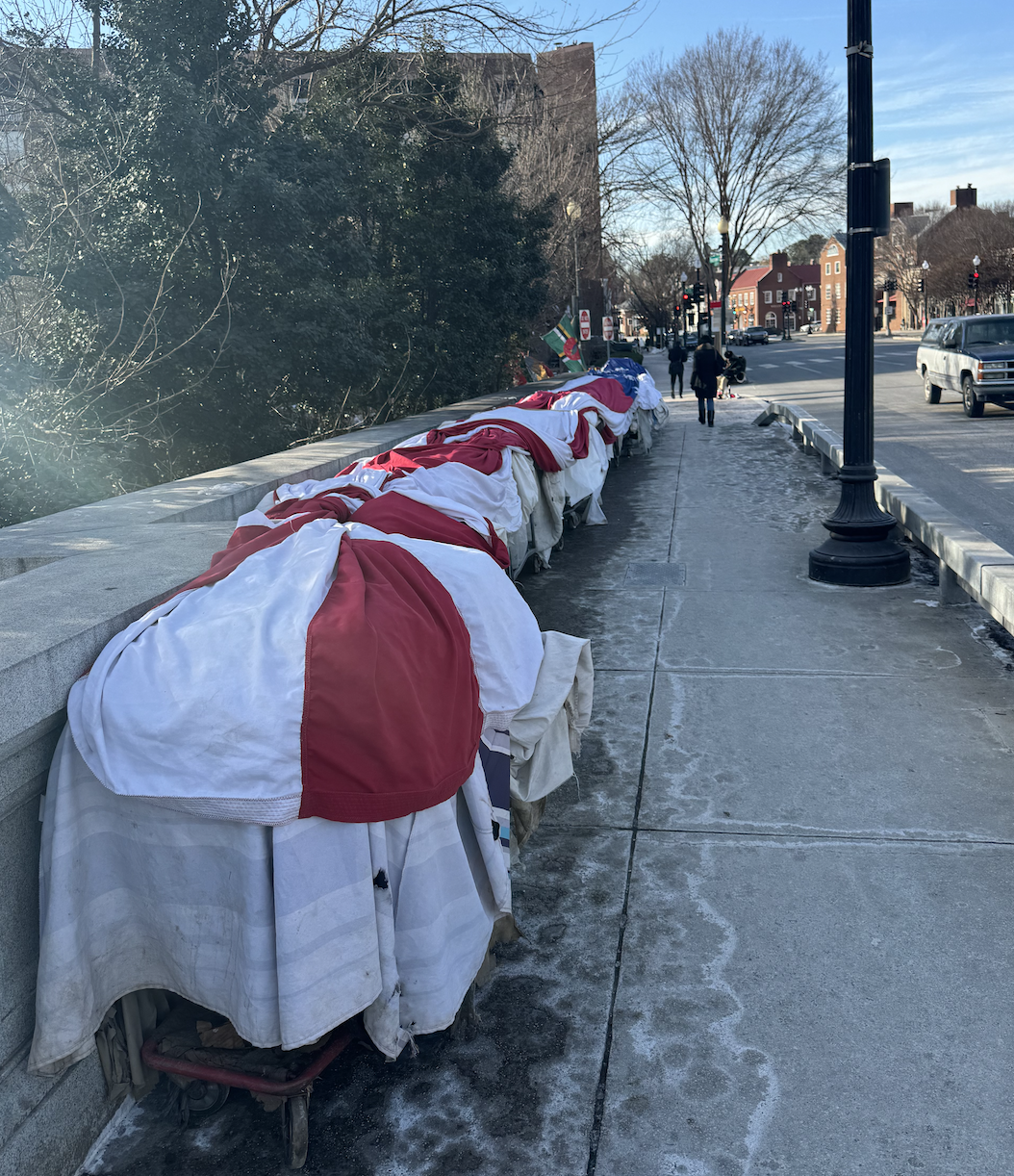
For many New Yorkers, these changes simply meant work and school became virtual — for those experiencing homelessness, it meant a complete disruption of life and routine. Hartford pushed back on the stereotype that those experiencing homelessness have no structure or routine, that they have more freedom because they seemingly have nothing to do. “A lot of times you assume that homeless people don’t have a schedule, like they can do anything at any time because they have no job or nowhere to go.” The lives of those experiencing homelessness are heavily routined: from only being able to stay in certain spaces for specific durations in order to avoid conflict with law enforcement to needing to arrive to specific areas of the city at certain times to stand in lines that could take one hour or three to get basic necessities before they run out. COVID shattered this. Hartford described the challenges, “because so many things close[d] down…their systems and schedules and everything was thrown off. And then 30% of all services shut down, the lines to everything else increased massively.”
When asked about how equitable he felt his clients’ access to masks, sanitation, testing, and vaccines was, Hartford was blunt. “Not at first for sure…it was inequitable at the beginning until we could build systems around…as they realized that we needed better options [the] New York City Department of Public Health started getting better and doing pop-up clinics for testing, and we were able to partner with different Medicaid-type settings and other government health settings that…started doing the temp pop ups on street corners —that was helpful.” His reflections underline a central truth: unhoused populations are often an afterthought in responses to crises. In many cases, this is due to stigma; however, in other cases, it is simply a case of erasure. Unhoused populations are frequently forgotten in overall responses to public health crises. Given how often the unhoused tend to be forgotten and excluded from policy and response, unprecedented circumstances — like those of the COVID-19 pandemic — require spending time figuring out how to include unhoused populations in policy and overall response, and sometimes that means not getting a truly equitable or robust response until six months into the crisis.

***

Hartford repeatedly returned to this theme of reinvention throughout his interview. “Everybody was literally recreating systems and figuring out new ways to do things when that happened.” There was nothing to build on — no precedent to use as a guide. Systems built and put into place in response to previous public health crises could not keep pace with the mental, emotional, and physical toll of COVID. New systems had to be developed from scratch and repeatedly refined as new information became available. Even the 1918-1919 Influenza Epidemic and the Bubonic plague – which outpaced COVID in death toll — did not occur in as globalized society as now. These diseases ravaged populations that were much more fragmented and localized; in contrast, the COVID-19 pandemic occurred in real time before a global audience, with daily updates, digital tracking of outbreaks, and an international sense of crisis.
Despite the challenges, Hartford emphasized his pride in his city’s response: from the city allowing unhoused individuals to stay in hotels versus crowded, congregate shelters, to public health professionals coming to outreach events and providing services on site. Especially when comparing the city’s experience to states and regions that viewed COVID as something that wasn’t real or didn’t exist, he believes that New York City, overall, did a great job.

One of the most important points Hartford raised in our discussion was a seemingly simple but straightforward assessment — and one that substantiates the central purpose driving this project. “Combining of homeless housing solutions alongside of public health…has to stay because if your body is not good, then you are in crisis, and you cannot think about housing or sobriety or anything else if you are sick.” His words point to a lasting lesson of COVID: health and housing are not separate. In a globalized society where the health of one impacts the health of all, we must ensure that the most vulnerable of society are included in public health policies and initial responses. We cannot keep reinventing the wheel; public health infrastructure in the United States must be changed and rebuilt in a way that includes vulnerable and marginalized communities from the start.